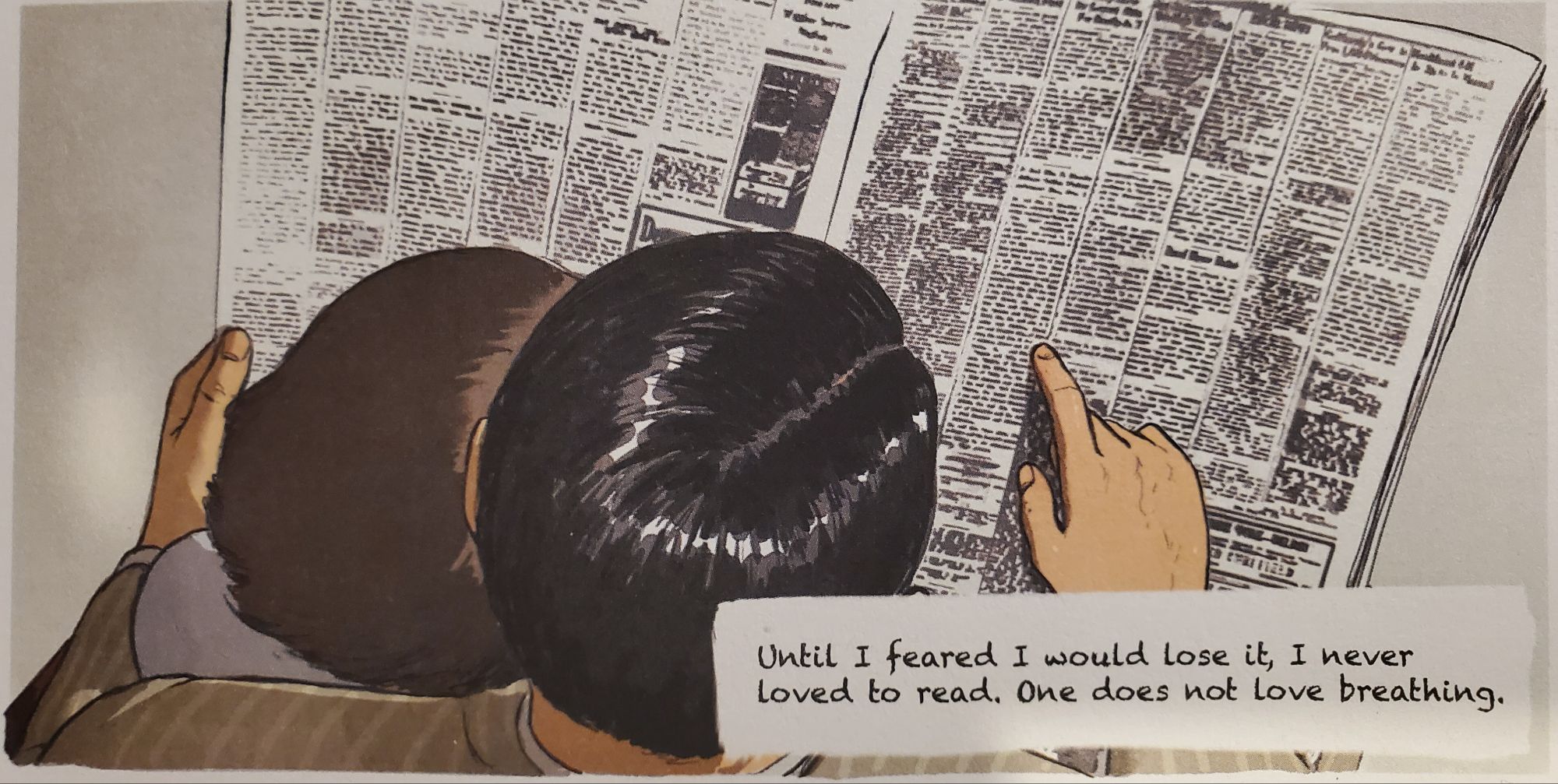
Until I feared I would lose it, I never loved to read. One does not love breathing.
—Harper Lee, To Kill a Mockingbird
Every writer should strive to make each sentence count the way this pairing does. In only seventeen words, Harper Lee gives us an entire discourse on what we take for granted every day.
All of us take for granted precious things, whether it’s our spouse or our dog or our food. We don’t give them much thought until the spouse leaves or the dog is being put down or we don’t have anything to eat. In the first half of the pair, Lee uses this universal experience to give us a slight shock about Scout never loving to read. She’s in a book, right? She has to love to read, doesn’t she? I mean, we’re reading, so we love to read, and how couldn’t someone like that?
And then the one-sentence setup delivers the punchline (whether you read it as humorous or as serious, you’re right either way). She doesn’t just love reading, it’s as important to her as breathing. And, like all of us, she doesn’t love the thing that keeps her alive.
What a Jem this couplet is. See what I did there? If you didn’t, read the book. I almost never read books more than once—there are plenty I’d love to, but I won’t live long enough to read all the books I want to read even once—but To Kill a Mockingbird is one I’m making an exception for. I’m happy to be taking the time to thanks to this graphic novel adaptation of it, which will also be the first graphic novel I’ve ever read.
There are books that waste hours of your life, there are ones that give you a good hour for every hour you put into them, and there are ones that add years of wisdom to your soul in return for its hours in your hands. To Kill a Mockingbird is one of the rare members of the last group.
Next week: Homer illustrates how to open an epic.
See the index for what’s been posted and what’s to come.


I'd love to hear from you!