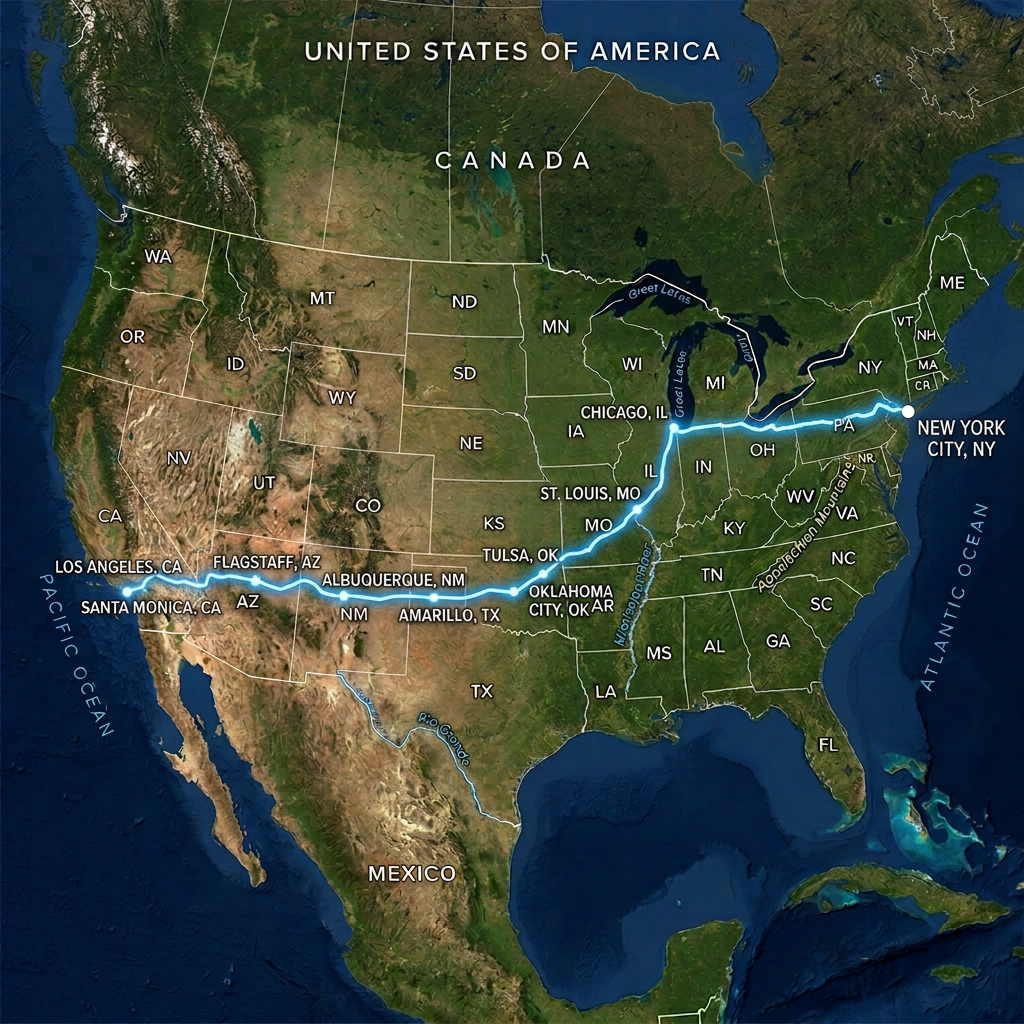
Recently, I finished the nonfiction book C. C. Pyle’s Amazing Foot Race: The True Story of the 1928 Coast-to-Coast Run Across America. I liked it so much it ended up being the subject of Story Cubes 59.
It’s the story of a run across the United States at the peak of the Roaring Twenties, when Route 66 was still unknown and crazy feats of endurance were the rage. It happily took the nickname “Bunion Derby,” and even had a mobile radio station following it before radio was mobile. The prize was $25,000, which would be almost half a million dollars today.
While as a fan of endurance sports such as cycling and ultrarunning, this book’s subject matter is right up my alley, that’s not what caught my admiration. The real standout in this book (and the reason I believe it should be more highly rated than it is) is its characters.
The man who came up with the idea was C. C. Pyle, who earned the derisive nickname “Cash and Carry Pyle” because he had a habit of skipping out on his debts. He made a pile of money being the agent for Red Grange, a huge football celebrity at the time, but he spent money faster than he made it. He traveled along with the race in a palatial motor home long before motor homes were even a thing. More than once during the Bunion Derby he was on the run from people who had sued him and at one point, his motor home was impounded because he’d stiffed the garage that had fixed it when it was damaged during a bridge failure. He was a visionary who’d created an iconic race whose vision did not include paying what he owed.
Contrasted against him was the wholesome country boy from Oklahoma, Andy Pyle, who was in the race to pay off the debt on his parents’ farm. Another entered the race because he was in love with a woman who was indifferent to him and he hoped this would prove his worth to her. And another was hoping to use the money to pay for his education. Although half of the racers dropped out in the first 300 miles, the ones who stayed in became even more tenacious as the miles wore on. Even the ones who had no chance of winning by that point were now in it simply to meet the challenge on their own terms.
On top of these real racers, there was an eccentric preacher who called himself Brother John and a homeless man with two dogs and his ukulele who was called Ukulele Jake. C. C. Pyle considered Ukulele Jake a nuisance and on one of the overnight stops, the crooked Pyle had the SPCA sneakily dognap Jake’s companions and then when he looked around town for his dogs, the police arrested him for vagrancy. C. C. Pyle started the race as a scumbag and he ended it as one, but on the last day of the race, Ukulele Jake reappeared.
I’m honestly baffled why this book only has 3.7 stars on Goodreads. Admittedly, there are points where the writing is a bit shaky and the author inserts opinions where none were necessary, but the story itself has a better plot than most new novels and the characters can’t be surpassed.
Without good characters, though, the plot doesn’t matter. Think of the books that are masterpieces: The Great Gatsby with Jay Gatsby viewed through the lens of Nick Carraway, Madame Bovary and the feckless dissipation of Emma Bovary, or (since it’s currently popular again) Odysseus of The Odyssey. Or think of Val Kilmer’s charming intellectual rockstar Chris Knight in the movie Real Genius or his cool foil “Iceman” to “Maverick” in Top Gun.
Even Shakespeare himself wasn’t a particularly great weaver of plots; he was the 16th Century equivalent of the Hollywood studios that crank out the same plots over and over again, but he was a master at creating characters. Sometimes he was so good that the characters drowned out the plot: today everyone thinks Romeo and Juliet is a love story because of the characters, but it’s really about the destruction brought about by the hate between two families.
So think about what books are your favorite, then think about the characters in them. You’ll probably see that the reason you like those books are the characters. Reread your favorite book and pay particular attention to the characters and see if what makes them so good is that what happens in them is a reflection of who those characters are; the characters influence and drive the plot rather than being driven by it.
And when you’ve finished that, create a character you’d love: someone you’d want to read a novel about. Then split the things you like about him or her (or maybe it) into another one and probably one or two more. You can’t make one character who has everything you’d like at the same time. Those are boring Mary Sues, and the interesting parts come from how each character’s traits interact, clash, and complement each other.
Once you’ve created two or three characters, have them talk to one another and they’ll start doing things on their own. You don’t have to draw up a long plot for them: if you’ve created distinctive characters, they’ll find things to do that you wouldn’t have come up with had you tried to impose a plot on them. After you’ve done this for a while, you’re well on your way to writing something worth reading. Enjoy the journey and have fun letting them have fun!

I’d love to hear from you!