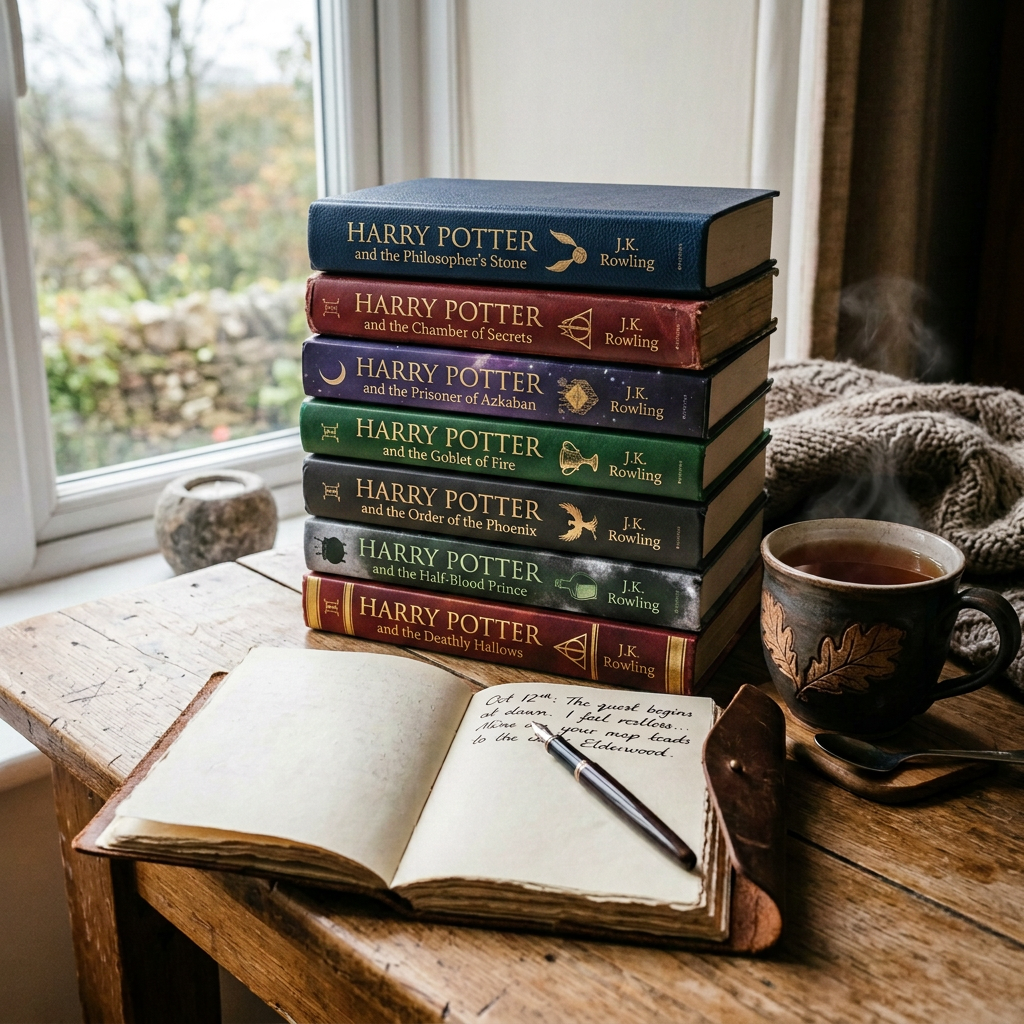
I was 23 when the first Harry Potter novel came out, so I was a little past its target demographic. I was also in the Army, so I was too busy for children’s literature, and also isolated from Pottermania by being stationed in Hawaii long before social media—even the internet was rare and almost exclusively dialup-only back then. When I wasn’t working as an intelligence analyst, I spent my weekends on one of Oahu’s beaches, and when I did read, it was Nietzsche, Dostoevsky, or Carl Jung. (Yes, I’m the kind of person who would read Memories, Dreams, Reflections by Jung on the beach in paradise.)
Nonetheless, when I joined Goodreads in August 2008, the whole Harry Potter series was one of the first things I added to my “Want to Read” list. I didn’t expect it to take 18 years for it to actually happen, but at 9:01 a.m. on August 12, 2026, it finally did:

It was hard to avoid spoilers for all those years, although not impossible because, again, both my reading tastes and demographic group don’t tend to overlap the Pottermania crowd.
It was much easier to avoid all the controversy about her opinions on non-literary matters: first, because I simply ignored them. The outcry over Rowling having an opinion on something completely drowned out the myriad of noble opinions she wasn’t shy about putting into her writing: that there is a good and an evil and with hard work and bravery, good can overcome evil; the humorously-named S. P. E. W. as a call for equality; Rita Skeeter as a cautionary tale about taking the press at face value, and so on.
Second, because I separate the art from the artist. As one of my most favorite authors, Jorge Luis Borges, said, “I think of keeping [my opinions] in watertight compartments. Everybody knows my opinions, but as for my dreams and my stories, they should be allowed their full freedom, I think. I don’t want to intrude into them, I’m writing fiction, not fables.” While Rowling does not do the same, she is also writing children’s fantasy, not intellectually-challenging Borgesian literature.
From here on, keep in mind that I write the rest of this post as someone who, while inside the Harry Potter world, intentionally tried to set aside my normal reading habits (in which I don’t just consume but I actively think about what I’m reading and try to see why it works or doesn’t). I made an effort to approach these books as an adolescent who is reading for pleasure would.
Also, this is not an analysis of Harry Potter, it is a reflection upon it. I am sure there are many things I missed along the way that have already been dissected and explained and overexplained on a million different websites. I have not read a single one of them yet, although I am sure I will at some point get into the larger lore to fill in the gaps. This, above all, is what I like most about the entire series: it introduced millions of children (and some adults) to the idea that novels can be fun and at the same time can be filled with so many ideas and wonders that are only dug up through the mind’s mining. So if you read something below that you think is obvious and I’m the dumbest person in the history of persons, that’s great. Leave me a comment and I’ll read it. This isn’t a deep reading (I’ll save that for my master’s thesis on Pale Fire next year), it’s a few thoughts I had on reading the series.
Rowling’s strengths are creating characters and telling a story. Her weaknesses are sustaining her characters and controlling her story. Harry is introduced in the first book as an ideal character to root for and one everyone can empathize with: the person who has so much inside him that is unappreciated, but instead of having to keep that hidden forever, he gets dropped into a world where he can be himself. There’s a winner right there. Then we meet Hermione, the brainy, ultra-competent sidekick, and Ron, the sad/comic relief. None of this is anything earth shattering, but it is done well.
But then it comes to sustaining that vitality, and Rowling is weaker at that part of the craft when it comes to the sequels. (One book, yes, she’s great; seven books, no.) Hermione, not Harry, is by far the most fleshed-out character in the entire series. She’s also the only one who is realistically consistent; as the books go on, there are several places where Harry in particular and Ron occasionally (except when he takes a long walk off a short cliff in the last book, which all-too-contrivedly ends up working out for everybody) act in ways they would not act. Sometimes these are ways no rational human would act, let alone these characters who we’ve come to know. At times, it seems like Harry walks around under the spell of a confundus charm because that’s what the author needed for convenience. Writing a book is hard work; it’s not easy to sustain that energy for a million-plus words.
Other times, Rowling creates an interesting character who ends up not doing nearly as much as they could. Rowling has a great imagination, sometimes witty and whimsical in a way I adore. She uses it and then stops short of giving it the brilliance it deserves. Luna Lovegood in particular would have been a wonderful fourth character to add to the trio of Harry, Hermione, and Ron, but she doesn’t get elevated to the role she deserved. Instead we get the “now you see her, now you don’t” Cho Chang, who Harry reacts to in a too-stupid-to-be-real way (even for a teenager). The centaurs, and Firenze in particular, were another missed opportunity. And don’t get me started on the dragon Harry frees from the bank which is never seen again. As Chekhov (almost) said, if you see a dragon in Act I, that dragon had better fire before the end of the play.
And then there are the Dursleys. I get and can accept that they’re over-the-top caricatures in the first book. I’m quite willing to give Rowling a lot of liberty in this one because they’re Harry’s foil and a way for us to feel exhilarated when he escapes their clutches. But then they keep appearing as less-believable set pieces to open the next books, and with each return to the unfunny well, their behavior becomes more ludicrous, especially once we’re given more information about Petunia/Lily’s history and once wizards from the ministry keep showing up and telling them not to act like such insufferable asses because what Mr. Dursley keeps saying isn’t real is right there before the whole house’s eyes. I get that this is where Rowling tried to pack a lot of humor in (she drops some scattered humor in elsewhere which I enjoyed and appreciated, although this is where it’s most concentrated), but the Dursley’s consistent buffoonery gets tiresome. In this case I am willing to concede that this might be hilarious for children (blowing people up like balloons is pretty funny) and this is a me problem. But one of the reasons I call these set pieces is because they can be plucked right out of the book with no loss of information or momentum. If you think I’m wrong and they were some of your favorite parts, that’s great, but all of them after the first one didn’t work for me because there’s no sense of growth or even change in them at all. They start cartoonish and remain cartoonish throughout.
Rowling has two annoying tics; weasel devices she resorts to too often. The first has to do with time, where several important things happen, then “three months pass…” A couple more important things happen, then—boom—it’s two more months. This is especially irksome in the final book when they spend week after week doing nothing at all (apparently Hermione forgot how to read, Ron has gone stir crazy, and Harry has always been useless at figuring anything out through actually making an effort, but who cares because he’s great at Quidditch except for the times he almost dies doing it), and then suddenly there is massive time pressure to destroy the Horcruxes and hallow the Hallows or both or neither or, for some inexplicable reason now, one or the other.
The second is that by the end of the series, Harry isn’t the “Boy who Lived,” he’s the “Boy Who Just Wouldn’t @#$% Die.” Even when he goes to his “Neo ends Matrix Revolutions” martyr/savior moment1 by dying by the hand of Voldemort, he doesn’t die. I lost count of the number of times everything went dark and Harry woke up in the hospital/the woods/Aruba/a photon torpedo shell on the Genesis Planet (oops, wrong fictional universe), magically (pun grudgingly used) with but a scratch. So at the end, he dies, but he’s not really dead, he’s only playing dead, except when he’s not because Draco (the boy who wanted to kill him) is still alive because Harry saved him (after Draco tried to kill him), which lets Harry off the hook at the critical moment.
That last sentence may sound critical, but it’s not; it’s actually exactly the sort of thing I admired in the first few books, before Rowling started getting lazy and self-indulgent with the fifth book. But let me add a qualification to “lazy and self-indulgent” because another way of looking at that (and I think it’s an equally-valid attitude here) is that one person’s self-indulgence is another person’s “playing around, expanding, and swimming in” a huge new world. I found book five (Order of the Phoenix) both flabby and poorly-controlled AND the one which had many of my most favorite parts of the entire series. Harry stepping up and leading Dumbledore’s Army is the series’ “Luke on Dagobah” moment, and it’s one of my favorites for the same reason that The Empire Strikes Back is a lot of people’s favorite in the entire Star Wars series. Of them all, I’d actually say Order of the Phoenix was my favorite.
I took a temporary break from the Potter books by reading Italo Calvino’s Invisible Cities, and I have rarely savored a book as much. I took that “grown-up lit” break between books 4 and 5, roughly halfway through, and I think I needed to rejuvenate my passion for reading with something more challenging before charging through the second half of the series.
A short digression. When I was in the Army, basic training was eight weeks long. That means for almost two solid months, I ate nothing but Army chow. It’s not an experience I’d ever want to have again, but it’s one I’m glad I had once. It gave me a moment in my life I still remember 30 years later. A couple of days before graduation, we were allowed out of the barracks to wander around post and go to the PX (post exchange, like a mini-mall). While I was there, I went to Burger King. I will never, for as long as I live, forget how amazing that Whopper was. After two months of Army food, I have never had and never will have a hamburger this good.
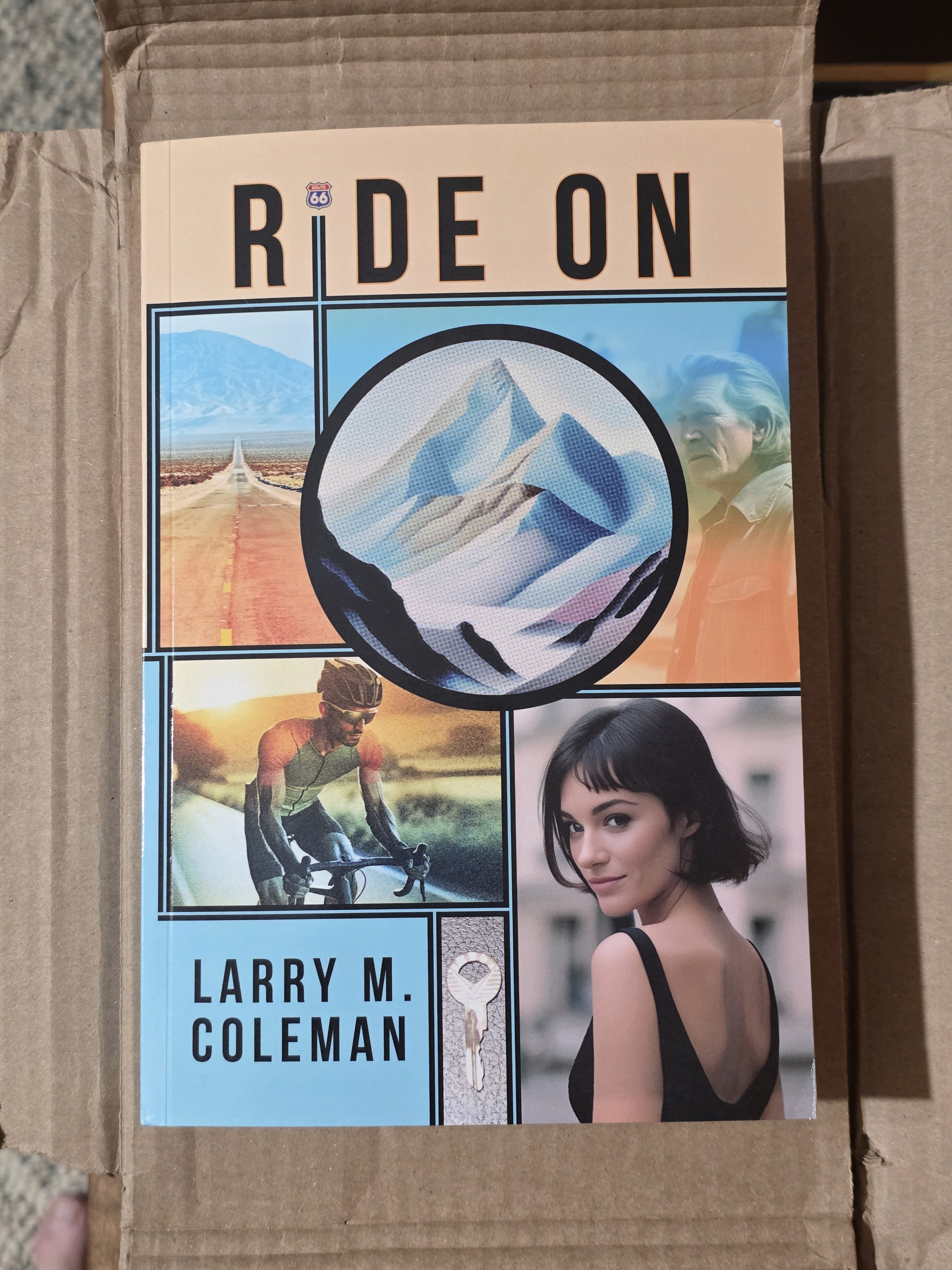
After finishing the seventh and final book, I made a mistake. I’d been eagerly awaiting the chance to read Italo Calvino’s If on a winter’s night a traveler (yes, that is the correct capitalization in this case; why that is is a story too long to get into here), saving it as a reward for finishing all seven books. (I rewarded myself in the same way for finishing Ride On by finally letting myself read Neil Gaiman’s American Gods.) I should have let that book sit until the next day, but I couldn’t help myself and opened Calvino’s book right away. After 1,084,170 words of Harry Potter books, If on a winter’s night a traveler felt to my brain the way that Fort Leonard Wood Burger King tasted in my mouth.
I’m glad I read this series. Not just so I can finally check it off my list so I can start reading another famous seven-volume series I’ve been dying to read, Proust’s In Search of Lost Time, but because this was a journey and an experience I thoroughly enjoyed. Rowling tells one hell of a story, and it’s one I’m glad to have finally made my way through.
- BTW, The Matrix: Reloaded and The Matrix: Revolutions are quite likely the most underrated movies in the history of film. They vastly extend and (the most important part in any sequel, especially one that’s two movies long) deepen the story and turn The Matrix from one quick, flashy, amazing story into a philosophically deep saga that spans so much of human intellectual history that it’s impossible to absorb in only one viewing. This is, ironically, the greatest criticism that people who don’t like Reloaded and Revolutions make. ↩︎

I’d love to hear from you!