
Last week’s post on ending up empty got me thinking about where ideas come from. As I said, anyone who tells you they know the answer is lying, but to be less flippant about it, I can’t tell you were they come from, but I have an idea where they hang out. It’s in that space where you don’t know something but you want to. That’s why the oft-given advice to “write what you know” is, to me, absolutely terrible advice. Those are the words that launched a billion terrible pieces of writing.
If you already know something, you’re less curious about it. And if you’re less curious, you’re less of a writer. All creative types (writers, artists, musicians, etc.), scientists, and just plain decent members of the human race have to be curious. Curiosity is the gap between what we don’t know and what we want to know.
The purpose of art is to lay bare the questions that have been hidden by the answers.
—James Baldwin
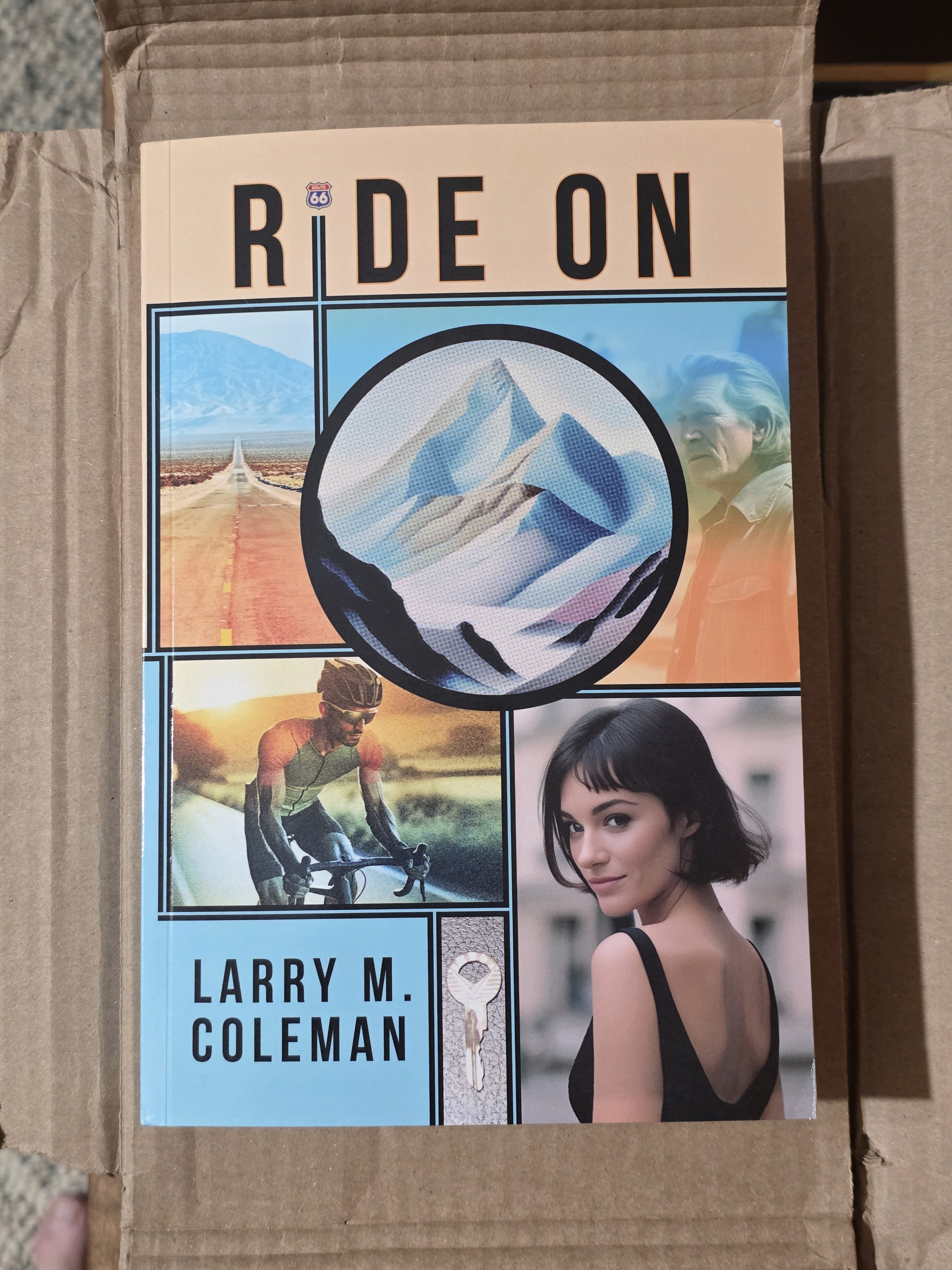
As a writer, you create inside that gap. You don’t know the answer until you’ve written yourself the bridge over that gap. If I only wrote what I know, I’d never have been able to write Ride On because I have no idea what it’s like to ride a bicycle down Route 66, or to be en elite cyclist or a former Apache helicopter pilot or a ballerina. I’d have had to write some formulaic, forgettable novel about an airliner. Instead, I wanted to know what it would be like to take a journey where two characters who are as opposite to each other as Ford Prefect and Arthur Dent were go down a legendary highway in search of treasure. And when I was done, I think Ride On ended up being a book that is fun to read because of all the fun I had exploring the gap between what I didn’t know and what I wanted to know.
Here’s a suggested rule of three: What if X met Y and did Z? In other words, pick three things you don’t know about and smash them together. Take two people you’d like to meet and get to know. I don’t mean historical figures (although if that’s what you’re into, by all means have at it; imagine if Joan of Arc and Gandhi teamed up), I mean products of your own imagination. They can be someone you’d want to hang out with or be besties with, someone you’d want to marry, someone you’d want to fight, or anything like that. Make two of them and make them have definite differences from one another, but something must unite them under the surface. Then pick something you think it would be fun for them to do, start writing and enjoy watching them do it.
Voilà! You’ve got yourself a buddy adventure. It may sound simple, but it’s the oldest genre there is. The Epic of Gilgamesh is the world’s oldest extant piece of literature and it’s a buddy adventure: what if a king (Gilgamesh) and a savage (Enkidu) go on a heroic quest?
There are plenty of examples of “What if X met Y and did Z” among the masterpieces of literature:
- What if a Midwestern bond salesman met an ultra-rich mysterious guy and introduced him to his cousin? The Great Gatsby.
- What if a self-centered, thoughtless woman married a loyal country doctor and spent the rest of her life destroying him? Madame Bovary.
- What if a sea captain met a whale and spent the rest of his life trying to get revenge? Moby Dick. (Change “sea captain” to “Khan” and “whale” to “Kirk” and you have the Star Trek movie that stands head and shoulders above the rest of them, Star Trek II: The Wrath of Khan.)
- What if a failed academic met a 1000-line poem and spent an entire book making annotations on it which make less and less sense as the novel goes on? Pale Fire.
- What if a woman met a dashing Count and had a scandalous affair with him? Anna Karenina.
- What if an alien from Betelgeuse met a totally unremarkable British man and they go on wacky adventures in space? The Hitchhiker’s Guide to the Galaxy.
Change “alien from Betelgeuse” to “eccentric millionaire,” “totally unremarkable British man” to “retired elite cyclist” and “adventures in space” to “adventures down Route 66” and you have Ride On. That’s no accident, because Ride On was originally intended as an homage to Hitchhiker’s Guide. It ended up losing a lot of that scaffolding as it took on a niche of its own (and gained an element of being a parody/smash-up with Ready Player One), but the basic construction is still there.
What all of these books have in common is that none of their authors were writing from what they know. Use your curiosity. It will make you a better writer and it will also separate you from AI slop. Generative AI has no curiosity; it doesn’t want to learn in order to create something original. It only seeks to make something exactly like what it already knows. Be human, and be good.
A book must be the axe for the frozen sea within us.
—Franz Kafka
If you’re still stuck or would like some ideas for X, Y, and Z, look at a random Saturday Story Cubes roll and let your imagination go. (That’s why they’re there; the Sunday stories are a fun byproduct and a chance for me to write some flash fiction, but the purpose of them is to give you a place to launch from.)

I’d love to hear from you!