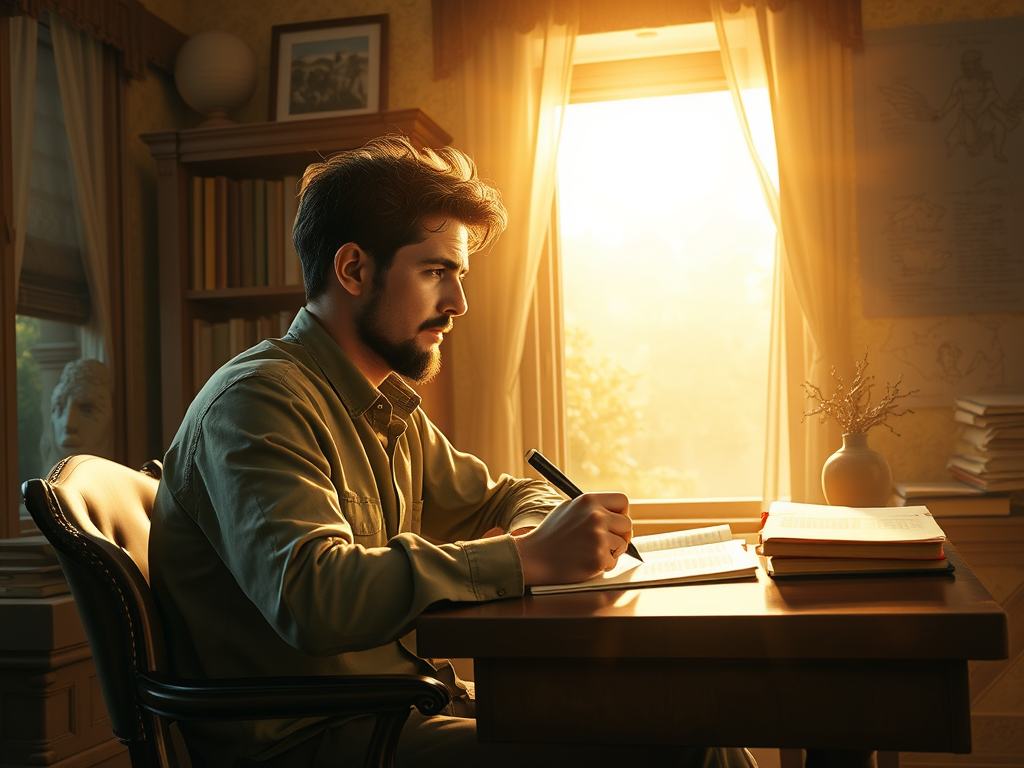
This week’s Friday Fiction Inspiration might be more along the lines of encouragement than inspiration.
Do you get discouraged when you think of something that you think is so original and then you find out that someone else already did it? I know early on, that used to happen to me and when it would, I’d be disappointed because now that idea was no longer mine.
I don’t think that way anymore. First, if I did, I’d have almost nothing left to write about. It happens to me all the time, and now it’s reached the point that I can almost understand why Stephen King wrote Duma Key, which is about a painter who can make things happen by painting them. (Worth a read, by the way.)
Here are some examples from my own life and work.
I have been writing a series about a set of people who are reincarnations of gods or other divine forms. The thing is, they have no idea that’s what they are. They live in the normal world just like us. They look just like us. They’re normal humans, but their whole personalities and actions are driven by the type of god or spirit they’re carrying (there are full gods, muses, angels, shamans, and so on). They have no way of knowing that what they think are just their personalities, quirks, or preferences are driven by their inner god. I’ve been working on this for several years and I’ve even got details of their mythology worked out. One of them is that they are all only children (or in rare instances, have no more than one sibling), and that certain lines (they come from many different ones: former Greek/Roman gods, Celtic, Norse, Christian, and so on) only give birth to females or males, but not both.
Totally new idea, right? There’s no way anyone has ever done this before. And then I find out years into this that the idea that gods are immortal, but they go about it by dying and being continuously reincarnated has already been done in Celtic mythology thousands of years before I came up with it. (And then, just for good measure, Indian mythology, too.) And to rub some salt in the wound, this summer while rereading The Odyssey, I find out that Odysseus may be an only son (and only had one son himself) because of his proximity to divinity. Two concepts I thought were totally mine have actually predated me by millennia.
Here’s a more recent example. A few months ago, I wrote this exchange in the novel that I’m working on now. The protagonist and her new lover have just had their first night together and they’re having a little pillow talk in the afterglow:
She slid her hand softly down my body and let her hand rest on the top of my thigh. “Are you beautiful because you dance or do you dance because you’re beautiful?”
“Chicken and egg.”
“No, really. I never saw you dance. But these legs are so beautiful. They look so soft and feminine, but the first time I touched them tonight I was surprised to find out that they’re like pillars of marble hidden under a thin layer of velvet. Which came first? Did you dance because you have legs like this or did dance make them into these works of art?”
“I don’t really know. I’ve never felt particularly beautiful. I’ve felt beauty pass through me while I danced, but it always dried up as fast as the sweat I put into making it. It never seemed like something I could hold on to until tonight.”
“What’s different about tonight?”
“I’m holding on to you.”
The question, “Are you beautiful because you dance or do you dance because you’re beautiful?” hit me out of nowhere and I absolutely love it. It’s one of the lines in the novel that’s my favorite. Another creation that no one else could ever have thought of. And then the other day, I come across this line in Rodgers and Hammerstein’s musical version of Cinderella from 1957, a full 68 years before I wrote my “original” lines: “Do I love you because you’re beautiful, or are you beautiful because I love you?”
These sorts of discoveries used to deflate me until I realized something. These coincidences don’t show that you can’t create anything original. The fact that you came up with them without knowing they’d already been done is a reflection on your creativity, yes, but not a bad one. When you come up with something and then see it’s been “stolen” by someone famous (probably Oscar Wilde) decades before you, don’t be discouraged. Instead, realize that what it really means is that you have the capability to come up with ideas that are just as good as the famous people who beat you to them. You’ve tapped into the same stream they drew from before you. Don’t think, “It’s ruined because Rodgers and Hammerstein already did it. I have to throw it away now.” Instead think, “Wow. If one of the best musical writing teams in history thought it was good enough for them to show the world, then that really says something about the idea I came up with independently of them.” If you take a set of Lego bricks and come up with the brilliant idea of making a building that’s inside out, where the guts aren’t hidden but make up the walls themselves, don’t kick it over and be disgusted with yourself when you go to Paris for the first time and see the Centre Pompidou.
This week was about unconscious, unintended “borrowing.” Next week, a little about thinking like someone else on purpose.
I'd love to hear from you!