I’m lazy. I don’t want to be bothered with reading things that don’t matter. This applies to books as a whole, but also things within the books. If something is only there for the sake of being there, it’s usually a waste of time. When I’m writing a first draft, I might put something in because it might be used again later, but if the first draft is over and it’s never seen or heard from again, it’s killed.
Does this mean that everything you write has to be some monumental object? Of course not. Let’s take a look at how much a mere nail file can do.
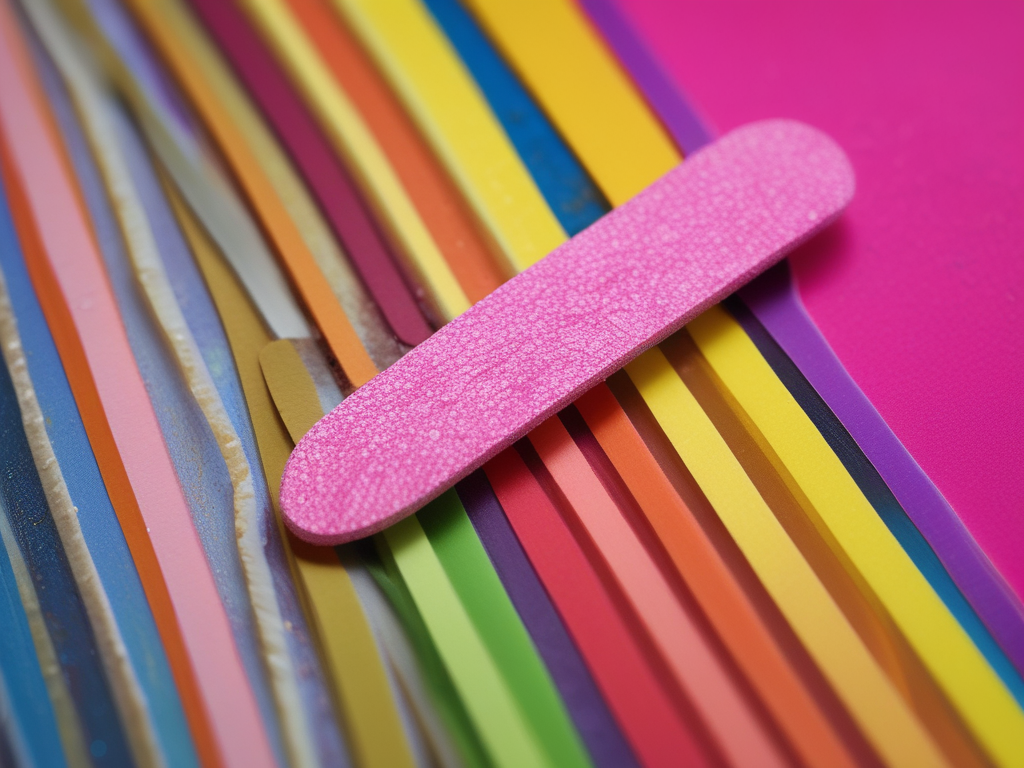
Eileen, the main character, has a metal nail file. It has a pink handle, and even that detail is important because before she loses her foot in combat, she lives in vivid color. Afterward, she goes black. Her slow return to color in her wardrobe parallels her return to life.
When we first meet this humble nail file, she is sixteen and it’s the last week of summer break before her senior year begins. She’s about to have the best day and the worst day of her young life:
I slid my finger under the dark flap of the Juilliard envelope, then swore and pulled it back quickly. It was annoying how much a paper cut could hurt even when it didn’t draw blood.
I put it away for a bit to punish it and flipped through the normal-sized envelopes. Not for me. Not for me. Not for me. Hey, wait, that one was for me. It was a small envelope from Stanford. I saw a lot of those addressed to my dad, probably asking for more money for the alumni fund, but this one had my name on it. It was the big bad Small Envelope. No wonder the mailman didn’t congratulate me on that one.
I opened my purse and took out my nail file to find out if they said why. I wanted to let Dad down easy. Maybe they’d apologize and say that due to another massive earthquake, Stanford University was temporarily out of service, having sunken underneath San Francisco Bay. I know I was already there as I slashed the nail file under the flap.
Congratulations and welcome to Stanford University!
A few hours later, she’s basking in a poolside chaise longue. (“Chaise longue” is misspelled as “chaise lounge” so often it actually looks weird when it’s spelled correctly, doesn’t it?) She’s next to the guy who’s been her closest friend her entire life. Now that she’s reached dating age, she’s developed a massive crush on him and has been trying her whole summer vacation to get him to take her on a date. The nail file that only hours before had just been a tool that brought her massively good college news now becomes an implied weapon (jokingly, of course) and a hint of how devastated she would be if he turned her down:
[I said,] “The whole thing about loving me so much. I thought that was what you meant.”
“I’m… confused.”
“That makes two of us.”
We were both silent for a few moments. I rolled to my side to face him. I propped my head up with my elbow, hoping to do it casually enough that it wouldn’t be obvious I was squishing up what little I had up top to make mountains out of my molehills. I put my other arm straight along my side, hoping to draw his other eye to my hips. “I’ve been hinting all summer. This is our last weekend together for a while. I just got into my fallback school.”
Michael laughed. “Stanford’s a stretch school for everyone on the planet. For you, it’s your soft landing.”
“Either way, I believe it’s only proper that you should take me on a date to celebrate.”
“Oh, God, umm, Leans, I don’t know how to tell you this.”
“You’re allowed to say no. As long as you hand me my purse first.”
“There’s not a gun in it, is there?”
“Kleenex. But you might want to take my nail file out.”
We next see it years later as Eileen is staying at her sister’s place in New York City. In one sentence, we see that it’s something she carries with her all the time because it’s something she uses to alleviate anxiety in a way that matches her fastidious personality:
I was reclined on Elle’s couch filing my nails. They didn’t really need it, but I’ve never been able to bring myself to chew them.
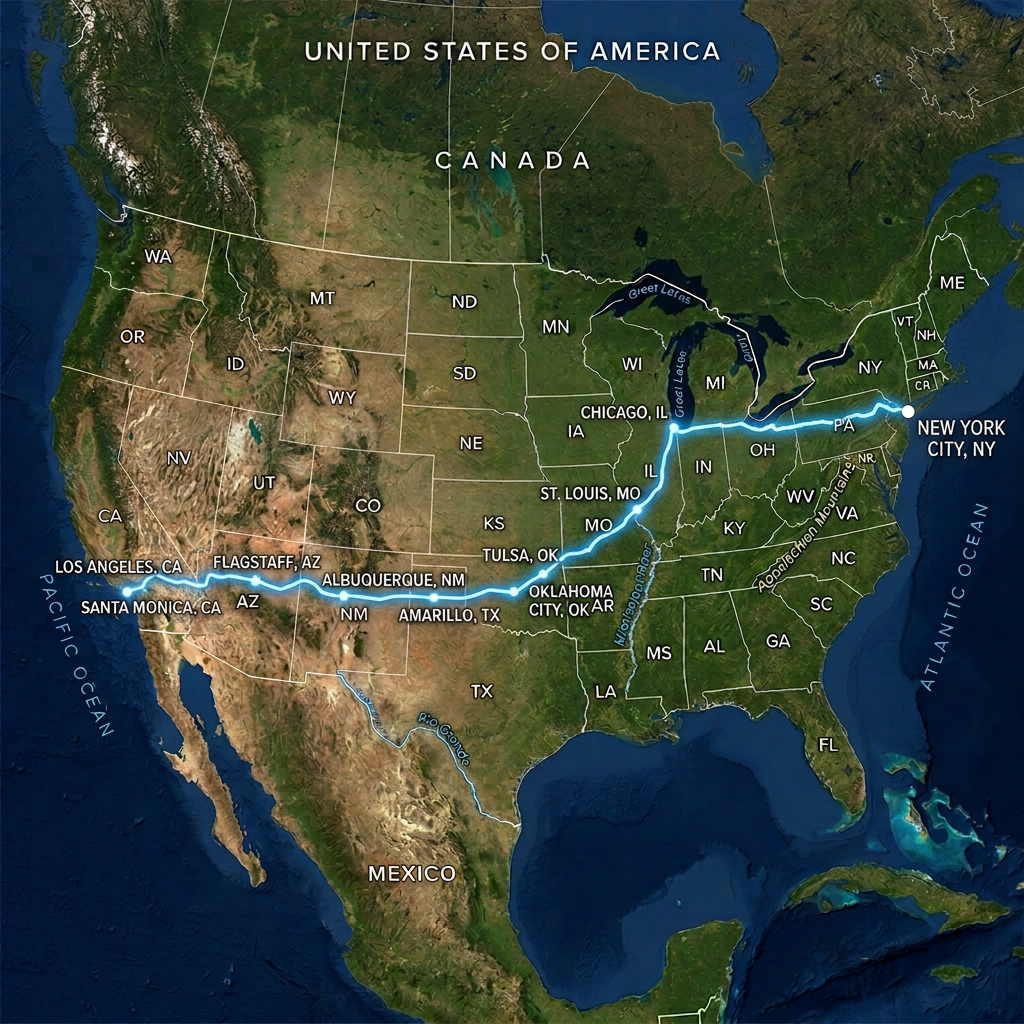
We next see it years later in a short list of miscellaneous items that she carries on her walk down Route 66, a tiny, silent bridge between her teen years and her battle-scarred veteran life.
It then shows up again at the end of the book, this time having grown from a nail file to a symbol of her letting go of her grieving for her lost love (the same guy she was at the pool with fourteen years earlier) and taking a step toward letting herself fully accept the love of her boyfriend:
But today [as I stood in front of his grave at the veteran’s cemetery,] I didn’t have any words. For the first time, I just didn’t feel like I had anything I needed to say. Everything that needed to be said had been said a few hours ago. I took the seashell [he had given me when I was seven] from my purse and placed it over the middle of “Afghanistan”. I stared at it for a while. It didn’t look right to me, and I couldn’t make it look right there, so I slid it down to between his dates of birth and death. That looked better, but still not where it belonged.
I knelt for a moment, then took out my nail file. I sliced a small semicircle in the turf in front of the marker and placed the seashell under the patch of grass. I tamped it down with my hand, then stuck the nail file deep into the ground so just the handle stood straight up in front of his marker.
“Sorry it’s not a refrigerator magnet, buddy. I wish I could do more.”
I fell onto my knees and into the kind of tears that are so strong they’re silent. The kind that make you feel like a little piece of you is falling away with each drop. After I’d been like that for a couple of minutes, I felt a light arm around my shoulder.
“Hey, Eileen. You all right?”
“Oui, love. I’m always like this when I’m here. You’ve just never seen it before. That’s why I told you to stay in the car.”
“I’ve seen it, just not in the sunlight. Is there anything I can do?”
“Bien sûr. Stop being rude and introduce yourself.”
He touched the cross on the marker and said, “Hello, sir. I’m Richard. Thank you for your service.”
He held me as my tears began to dry. I wiped my nose one last time and said, “I would have loved to have introduced you two formally.”
“Sometimes I feel like I’ve already met him.”
“I know he would have loved you.” He held me for a couple more minutes. “This year seems harder than usual and easier at the same time. I feel like I’m letting him go so I can put him somewhere deeper into me. I know that doesn’t make sense. It can’t be both at once.”
“I get it. When I retired and I got on my final flight home, when I left my teammates for the last time I felt sad for the good times but happy that I was able to have had them in my life at all. If you don’t make sense, then I don’t make sense, so take that for what it’s worth.”
He reached down and took the nail file out of the ground. I said, “No, leave that there.”
“He’s a guy. He doesn’t need a pink nail file.”
For the first time that day, I smiled. “Maybe it’s better you two didn’t meet.” I put it into the compartment in my purse where the seashell used to be.
So, as the book goes on, this nail file is:
- a simple letter opener
- an emotional signal
- a personality revealer (anxiety and how she deals with it)
- a personality revealer again (she holds on to things forever)
- a baton being passed from past to present
When I was first writing this, I didn’t set out to make a nail file mean something; it earned its place organically as the book went on. Not all things will work out like this. Sometimes a cigar really is just a cigar. But if that’s all it is, you need to ask yourself if it really needs to be in there at all.


I'd love to hear from you!