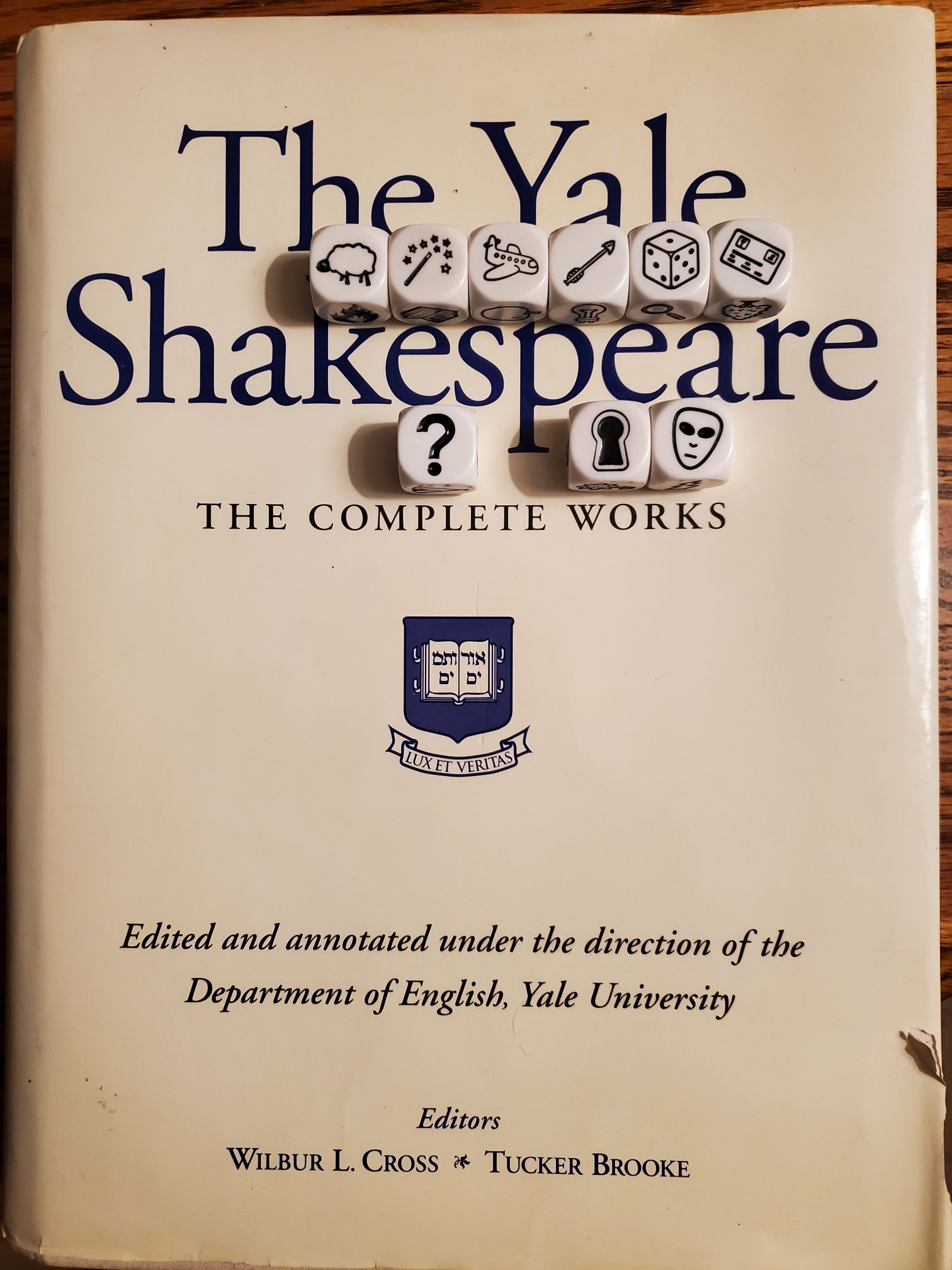
If you don’t know what story cubes are, see the introduction to the story cubes series.
To see the original roll of the story cubes, see yesterday’s post.

I’d drifted off to sleep reading the sonnets of Shakespeare. Which one doesn’t matter—they’re really all the same, aren’t they? His bucolic verse lured me to start counting sheep in a pastoral setting, a timeless one that inspired such great artists such as Shakespeare and Beethoven and the makers of “The Bachelorette: Farmyard Edition.”
That magical post-wake, pre-sleep time where we’re all lifted high above the cares and wants of everyday life, out of the reach of the slings and arrows of outrageous fortune (wait, have I heard that somewhere before?) let my mind rush into those places where angels fear to tread. I wondered, like so many others before me, who had really written Shakespeare’s plays. No man or woman of such modest beginnings could have had such insight into human nature that it would still be quoted centuries later. It could only be—
At that moment, it was all unlocked for me. I had solved the Shakespeare authorship question that had puzzled so many scholars before me, some of whom weren’t actually tenth graders reading a few sonnets for extra credit in third-period English class. It was obvious, so obvious that no one bothered to stoop to see the real answer: Shakespeare was an alien.
In the morning, I would reveal that shocking discovery to all academia in a place so reliable and trustworthy that it needed no peer review for people to believe it: Facebook.
Unfortunately, I dreamed about Brooke from study hall and forgot it by morning. The world will never know just how close it came to being creamed by the light of truth. Nor does Brooke.
It’s hard to write satire in a world that is its own satire nowadays.
The comments section is the perfect place for what you came up with. I’m sure you did better than I did this week!

I’d love to hear from you!