The fifth year I’ve done NaNoWriMo is over, and I’m now 5/5. For the third time in those five years, I got my 50,000 words in on November 30th. The final count was 50,505, which means my profile picture gained another leaf on its laurel:

You can read a chapter from this year’s novel, Beyond Category, here.
I made this year’s event as hard as possible for myself:
- In addition to my full-time job as an airline pilot, in September I added on the stress of starting grad school at Harvard. The class goes until December 21, so I had several thousand words of writing (plus two books to read) to do on top of the 50,000 I wrote this month.
- I intentionally came in with zero preparation. No notes, no jottings, no even thinking about what I might write. If I found my mind wandering toward the book, in previous years, I’d let it continue down that road. This year, I forced it to think of something else, which wasn’t all that hard, because I’m also writing a completely separate novel for grad school.
- I didn’t even let myself think of something as basic as a title, so I simply called it “6” (this is my fifth NaNoWriMo, but I wrote another book in the series outside of the nanowindow). It wasn’t until November 23rd that I came up with the title. And, to be honest, it’s a much better title than I would have come up with had I tried to go in with one.
- I imposed a stylistic constraint on myself and forced myself to experiment with a style I absolutely love reading, but don’t actually write in myself. I have a somewhat minimalist style where I give just enough description to locate the reader and then I get out of the way and let the characters do things. I generally let the reader fill in the details however they like, and most of the action takes place in dialog between characters. But I revel in lavish prose that lets itself breathe and expand when I’m reading, so this year I forced myself to make Richard a very descriptive narrator.
- I decided at the last minute to finally break down and try Scrivener, so I got to learn how to use it as I went. Because why not?
- I also publicly vowed that I would continue to exercise throughout the month. I said in one of my October NaNoWriMo prep posts that it’s important not to use the month to slouch around being physically lazy while being mentally active, and I put my money where my mouth was. I kept to that: I rode 125 miles over 7 rides and also worked out 6 times at the gym or in the hotel room, so I worked out 13 out of 30 days. That’s a little over 3 days a week. I average closer to 4, so there was a little hit, but I kept my promise not to slack off. And, as usual, I can think of two of those rides in particular where I came up with ideas that ended up in the book, and neither of them probably would have been in there without it.
Takeaways from the month:
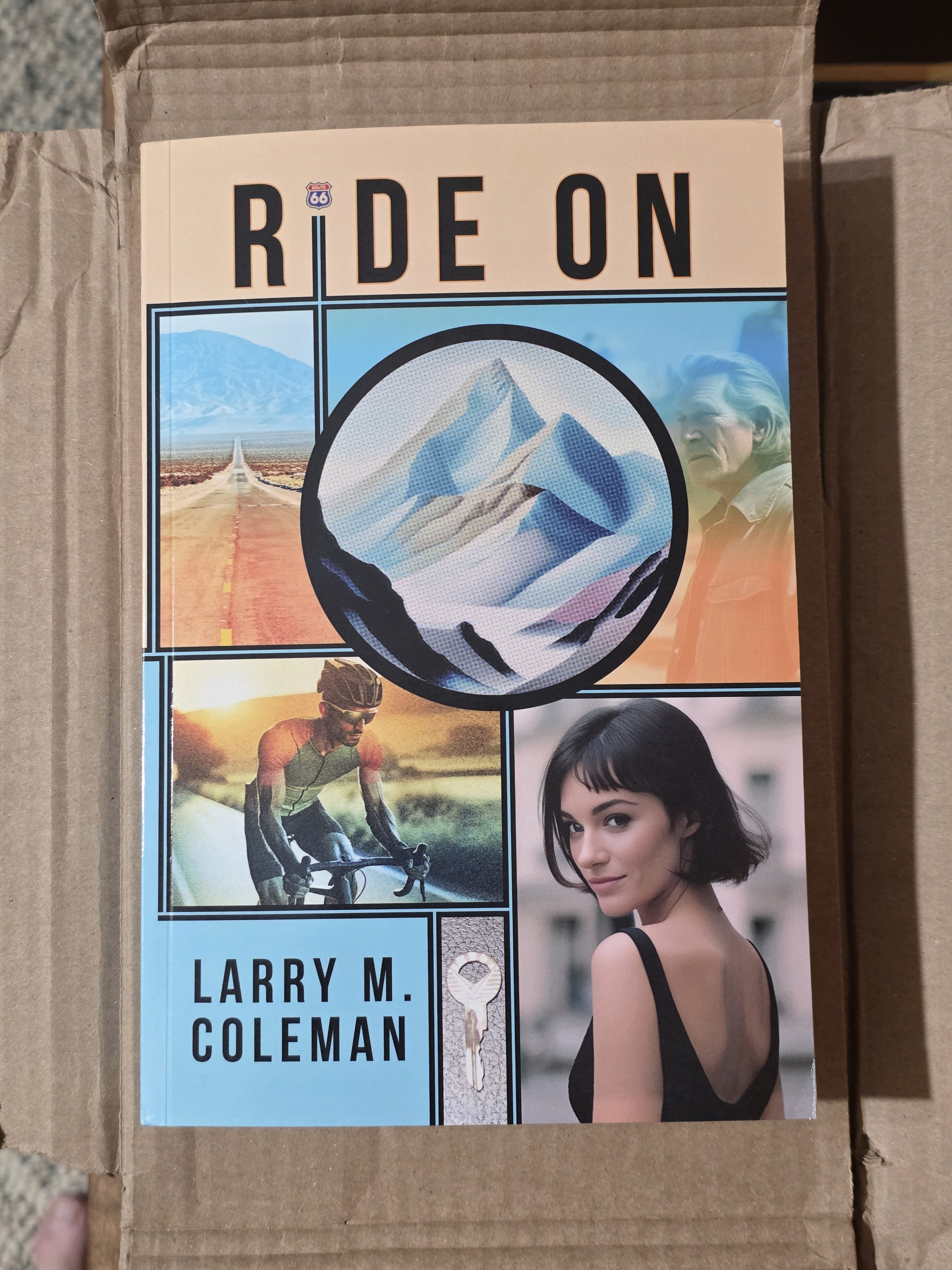
- I think I’m going to continue to go into books without a title and let the book tell me what it is at some point unless I have a title that already fits it (“Ride On” was set ahead of time and good, and “Mount Britt” is non-negotiable; I’m generally flexible on these things, but I’ll refuse to let a publisher change that particular title because it’s a double entendre, a critical location, and a character all in one).
- Forcing myself to write in a different style was something I liked the results of, and I enlarged my toolbox this year. I found my writing voice long ago: you know what you’re going to get when you read one of my books and you know how it’s going to sound. I like that, too, but getting out of that mold a bit stretched me as a writer in a good, useful way.
- Scrivener is something I’m still not sold on. People swear by it, and my mehness about it right now is that I probably haven’t learned 10% of what it can actually do. I’m going to stay with it until the end of next year, and if it still doesn’t do anything for me that my old way of just typing into a document didn’t, maybe I’ll ditch it. It may also just be the way I work; I don’t make detailed outlines and notes and plans. I jot down some things and then I make a novel out of it, so it may be overkill for me. Revision is a completely different workflow than writing, though, so maybe it will shine there.
- One thing I am NOT ever going to do again is to not go in with some percolated ideas that have at least half baked before the month starts. I still read during November (I read or finished six books throughout the month because I don’t shut my whole life down just because I happen to be writing a ton), and in Novelist as a Vocation I came across Haruki Murakami describing when he starts a novel. He lets an idea sit and marinade and gestate for a while until it bubbles up to the point where it asks to be written. I’d never heard it put into words, but I work the same way. Usually by September, my brain is already mulling over November’s book, and October is spent writing notes and sketches and having to keep myself from writing it. (Last year’s NaNoWriMo project was like that except the percolating started in February, and once November 1st hit, I finally let the horses out of the gate and finished it in 15 days.) This year, I spent the first week just trying to get the feel of the book, trying to make friends with it, and this one will probably require more rewriting and reorganization than anything I’ve written since my first attempt, when at least I had the excuse of not having a single clue about what I was doing.
What will I do next year? I don’t know yet. Challenge-wise, I’m thinking I might actually try writing the 50,000 words in a notebook by hand. But all of that depends on whether NaNoWriMo even exists next November.
This year had a very bad vibe about it from the organization. From their completely ridiculous statement about taking a stand against using AI would be them being “ableist” and “classist” (no, seriously, they said something that comically, colossally stupid) to the lingering doubts over whether their response to a moderator allegedly grooming minors (I’m not taking a stand on that because I don’t know enough to form a judgment, and I don’t engage in the popular pastime of empaneling myself on the social media jury and spouting off about things that aren’t my business), there was very much the sense that NaNoWriMo as an organization is severely broken, and the people who are in charge don’t have the skills to fix it.
This was the first year I didn’t donate to them. I very much support their mission of getting people to write, but right now I don’t support the people who are running it. Their messaging was terrible this month. There was much, much less communication and energy, and the little there was gave me no confidence that this is an organization that will find its old glory again.
At the beginning of the month, they usually have a “double donation” period, where if (for example) you donate $50, you get the thank you gifts of the $100 level. One of the few emails they sent out this month came past the middle of the month, and in it they pointed out that they usually have that, then moved on and never even mentioned that they didn’t this year and gave no reason why. Instead, they went on and on about how the donations have been going down every year, blissfully clueless that reducing the incentives to donate absolutely isn’t the way to fix that problem.
Before that email, if the month went by without the double donation week, I was going to donate anyway on Giving Tuesday (I usually don’t take the gifts, so it didn’t matter much to me), but the tone of that email made it clear that the people running NaNoWriMo learned absolutely nothing from their AI non-condemnation catastrophe, so these aren’t people I want to have my money. Instead, I’m taking the $100 I would have given them and will donate it tomorrow, Giving Tuesday, to Disabled American Veterans since Eileen, the first-among-equals of my main characters, is a wounded warrior herself.
If there isn’t a next year, I’ll still write something. Maybe I’ll do my own challenge of writing 50,000 words in February, the shortest month of the year. NaNoWriMo served an important purpose in getting people to create their own works in an age of piles of AI garbage, so I sincerely hope it can find its way back. Until then, read a chapter from this year’s project and let’s all hope for the best.

I’d love to hear from you!