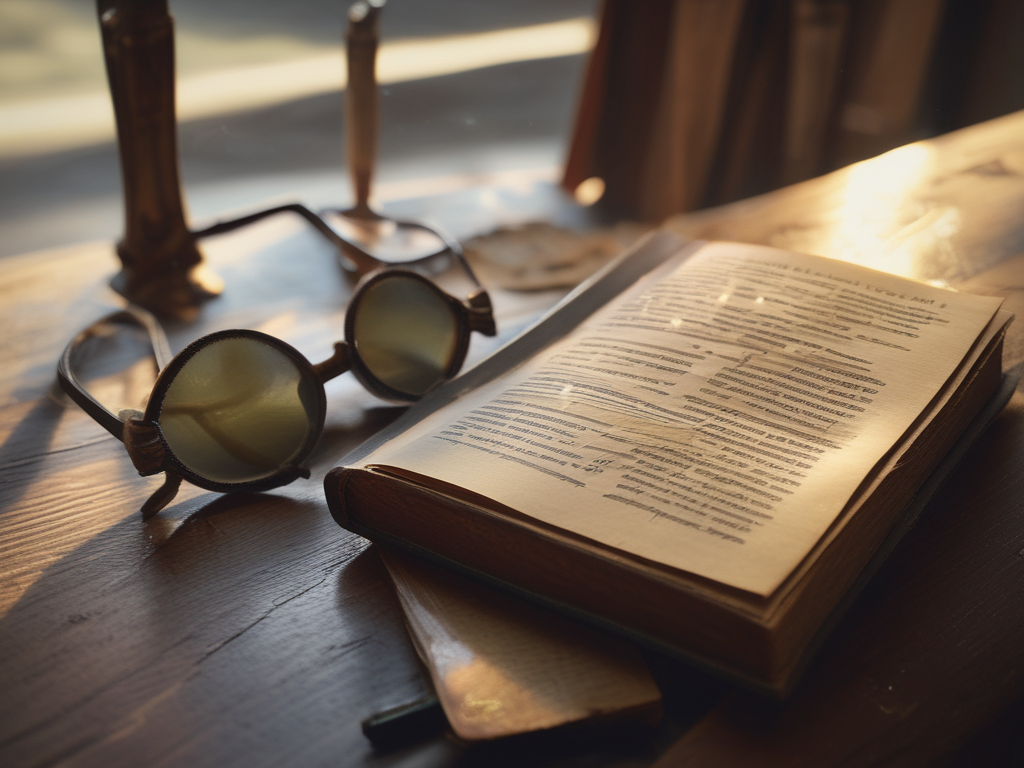
…[He] made it a rule never to touch a book by any author who had not been dead at least 30 years. “That’s the only kind of book I can trust,” he said.
“It’s not that I don’t believe in contemporary literature,” he added, “but I don’t want to waste valuable time reading any book that has not had the baptism of time. Life is too short.”
—Haruki Murakami, Norwegian Wood
While I don’t exclusively read only old books, they do make up the vast majority of the fiction that I read. (Most of my non-fiction actually comes from the “New Books” shelves at the library and makes up around half of my reading.) In fact, one of my more recent reads was a blend of ancient and old in one book: John Steinbeck’s marvelous rendering of King Arthur and the Knights of the Round Table. Also in the queue is In Cold Blood by Truman Capote, a book written in 1965.
I agree with the idea: if people are still talking about something decades later, it might be worth hours of my one and only life. In addition to books, I’m like this with games (I usually won’t buy a game until it has a “Game of the Year” edition, meaning it’s not brand new and it’s proven itself) and movies (this year I watched and loved La La Land, Moulin Rouge, and Love in the Afternoon—8, 23, and 52 years old, respectively).
This makes it hard for me to come up with trendy “comp titles” when sending queries, because if it’s less than five years old, there’s a strong chance I haven’t read it yet. I don’t want to be trendy, I want to be well read. I don’t want to write what’s popular today because what’s here today is gone tomorrow. Read this post twenty years from now and tell me who Colleen Hoover is without looking her up. Or tell me who Stephenie Meyer is right now, and she was the biggest thing in the world not even twenty years ago. I don’t think you’ll ever see any of the Twilight movies in a Criterion Collection edition, but Éric Rohmer (Love in the Afternoon) is all over their channel. Trendy sells, but art stays.
But while I love the message, it’s how it’s presented that makes this beautiful: the phrase “baptism of time” is one of those things that once you’ve read it, you wish you had written it, and now that you’ve read it, you no longer have the chance to.
That said, I included the full paragraph because I think it also has a flaw. The “Life is too short” is superfluous. It’s tacked on and gets in the way of the true message of the passage. I think it would read better if it ended on “I don’t want to waste valuable time reading any book that has not had the baptism of time.” That leaves that phrase lingering in the reader’s mind instead of having a cliché leave its muddy footprints afterward. Nobody’s perfect.
Answer to last week’s mystery author: Miguel Cervantes with the opening to Don Quixote, a book that inspired one of the most famous ballets (and Kitri, one of the most famous roles) in history as well.
Next week:
See the index for what’s been posted and what’s to come.

I’d love to hear from you!