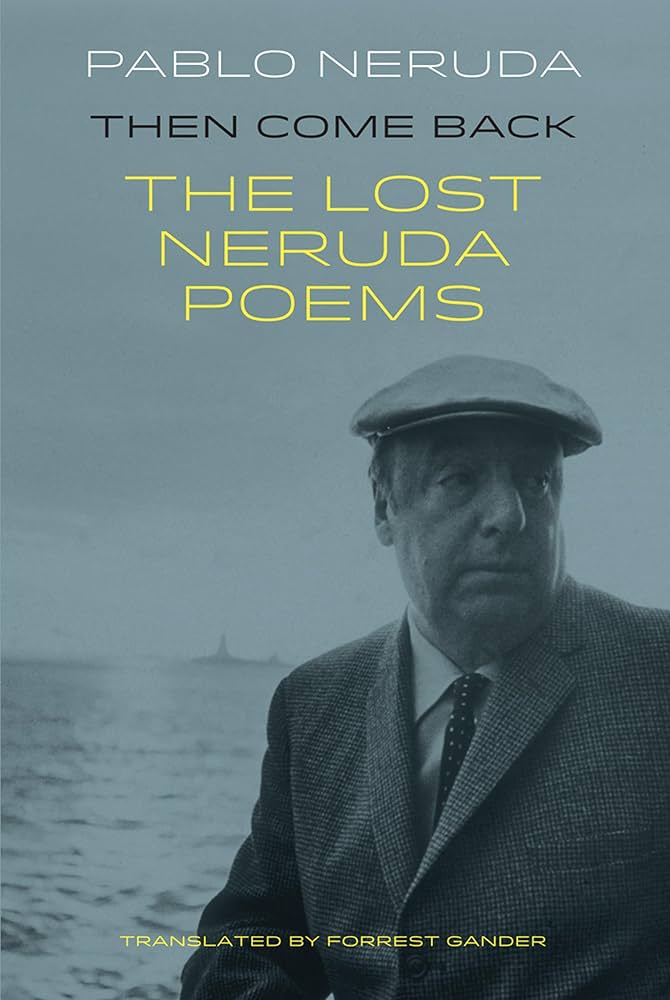
What do I ever give up to take on a translation project? My own writing goes on hold, but when, eventually, I come back to it, I bring to it something new—a feral vocabulary I’ve adopted from the translation, a fresh set of syntactical and rhythmical strategies, the image repertoire of someone else’s imagination. I always come back from translation changed.
—Forrest Gander, Then Come Back: The Lost Neruda Poems
“Feral vocabulary.” What a lovely concept, and one that probably was influenced by all the time Gander got to spend wrapped in the Chilean blanket of Neruda’s poetry and his mind. This kind of effort and craftsmanship is what we’re losing as AI takes over. Gander translated Neruda in 2016, just before ChatGPT and generative AI took the world by storm almost overnight.
Real-time translation and interpretation systems have reached the “good enough” level, which will shove translators into the niche of scholars rather than the artists they are. As someone who has translated a novel from Spanish to English, I understand how much craft goes into translating prose. In some ways, it is more difficult than writing the novel in the first place. You have to know not just what the author is saying, but how they are saying it, and you have to ship that across the bridge you’ve built between the two languages. Add the complexities and ambiguities of poetry and Gander had a monumental task before him, one which he carried out brilliantly. You can see what effort and skill and energy it takes to do that in this week’s Beautiful Sentence.
A full review of the book will be up once I finish it. This is not a page-turner, it’s a page-savorer thanks to Gander’s skill.
Last week: A William Butler Yeats trifecta.
Next week: Marc Chagall on where art begins.
See the index for what’s been posted and what’s to come.


I'd love to hear from you!