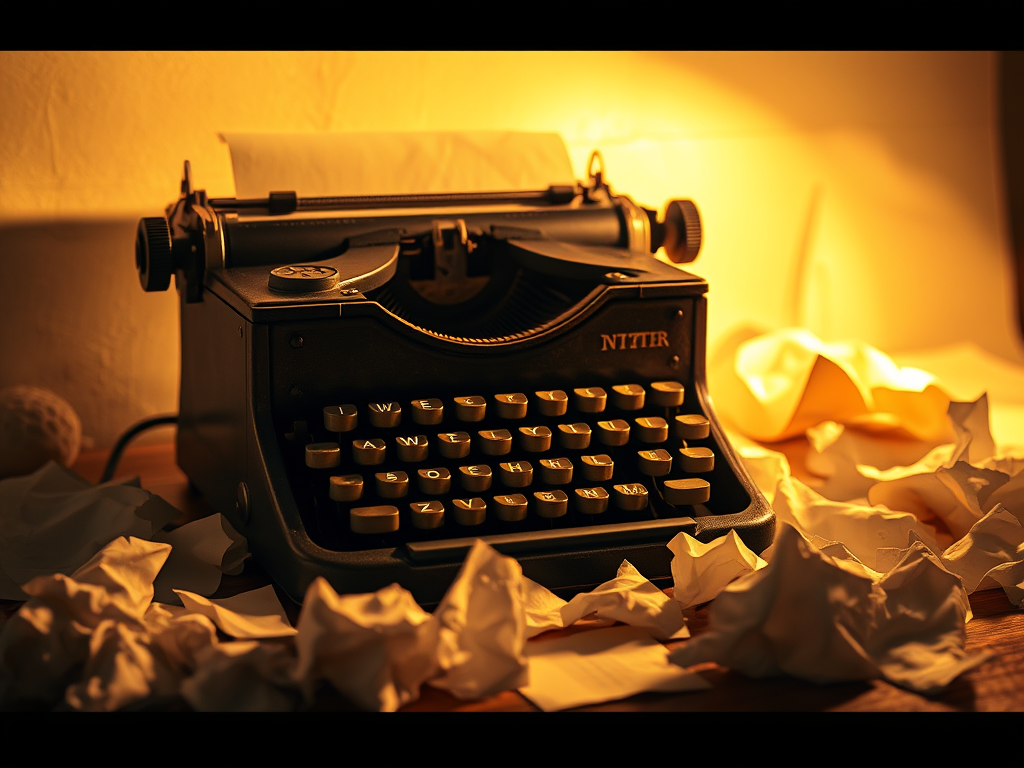
Writing is simple, right? All you do is say what happened. Except that unless you’re writing nonfiction, what happened didn’t actually happen. And what did happen in your head is always better than what ends up happening on the page. That’s a frustrating feeling, the “lost in translation” dilution, scrambling, and vitiation that happens between the brain and the fingers.
And yet, as Robert Lowell said, why not say what happened? After all, Lowell won the Pulitzer Prize not once but twice, and even he struggled to say what he had to say. Read his wonderful poem “Epilogue” and see for yourself. It is an ode to imperfection both in the writer and the art.
Remember, the only place where writing is a televised sport and you have to get it right the first time is in a Monty Python sketch. You don’t have to get it right on the first try. Or the fifth. Or the twentieth. The only time you have to get it right is the last time.
So give yourself permission to say what happened. Say what you have to say, even if you haven’t figured out the perfect way to say it. Saying something is better than saying nothing because you can fix something, but you can’t fix what you don’t write. Why not? And why not now?

I'd love to hear from you!